
Shopping for a new mattress often feels like navigating a maze of marketing jargon. Between memory foam, innerspring, and hybrid models, the choices are endless. But if you are looking for durability, responsiveness, and cooling, latex is likely on your radar.
What is Natural Latex?
Natural latex is exactly what it sounds like: a material derived from nature. It starts as the sap of the Hevea brasiliensis, commonly known as the rubber tree. These trees are primarily grown in Southeast Asia, Africa, and South America.
Harvesting and Processing
The process begins with “tapping” the rubber trees. Harvesters make a small incision in the bark to collect the milky white sap. This method is sustainable because it doesn’t harm the tree, allowing it to continue producing sap for up to 30 years.
Once collected, the liquid sap is whipped into a froth and baked to create foam. There are two primary methods for processing this sap into mattress cores:
- Dunlop: The sap is poured into a mold, filled to the top, and baked. Sediments naturally settle to the bottom, creating a denser, firmer base and a slightly softer top.
- Talalay: The mold is only partially filled. The air is vacuum-extracted to expand the foam, and then it is flash-frozen before baking. This results in a more consistent, lighter, and softer feel.
Benefits of Natural Latex
Natural latex is often considered the gold standard in the mattress industry for several reasons:
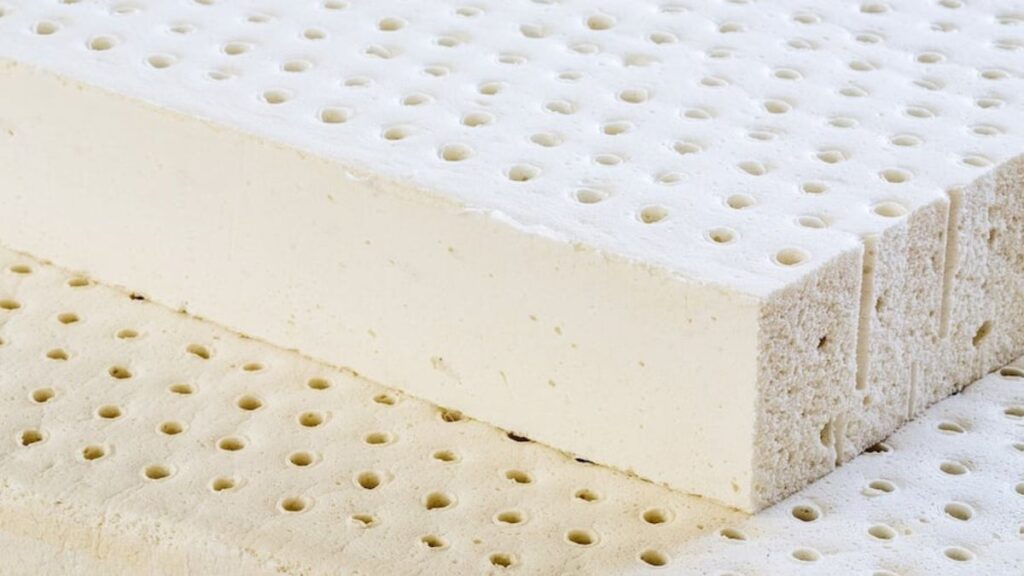
- Breathability: Its open-cell structure allows for excellent airflow, making it naturally cooling compared to memory foam.
- Responsiveness: It has a signature “bounce.” When you move, the material instantly springs back, preventing that “stuck in the mud” feeling.
- Eco-Friendly: Because it comes from renewable resources and is biodegradable, it is a top choice for eco-conscious shoppers.
What is Synthetic Latex?
Synthetic latex is a man-made imitation of natural rubber. It is engineered to mimic the properties of real latex but is created using petrochemicals.
The Manufacturing Process
The primary ingredient in synthetic latex is Styrene-Butadiene Rubber (SBR). SBR is a plastic-like material also used in the production of car tires and conveyor belts. To create synthetic latex foam, chemists polymerize styrene and butadiene to create a liquid that behaves like natural rubber sap.
From there, the manufacturing process mimics that of natural latex (usually the Dunlop method). The synthetic liquid is whipped, poured into molds, and vulcanized (baked) to set the shape.
Pros and Cons of Synthetic Latex
While it isn’t “natural,” synthetic latex does have its place in the market.
- Pros: The biggest advantage is consistency. Because it is chemically engineered, manufacturers have precise control over the firmness and feel of the final product. It is also significantly cheaper to produce than harvesting natural sap.
- Cons: It lacks the durability of natural rubber. Synthetic latex tends to break down faster, lose its bounce, and develop body impressions earlier. It also tends to off-gas—releasing chemical odors (VOCs) when new—which is a common complaint among sensitive sleepers.
Natural vs. Synthetic: Key Differences
When weighing your options, consider these four major categories.
Durability
If longevity is your priority, natural latex is the clear winner. A high-quality natural latex mattress can last 15 to 20 years without significant sagging. The molecular structure of natural rubber is incredibly resilient.
Synthetic latex typically has a shorter lifespan, usually falling in the 6 to 10-year range. Over time, the chemical bonds in SBR break down, causing the foam to soften, crumble, or lose its supportive qualities.
Comfort and Support
Both types offer that distinct latex “push-back,” but there are subtle differences in feel.
Natural latex is known for its elasticity. It contours to the body to relieve pressure points while simultaneously supporting the spine. It feels buoyant.
Synthetic latex can feel slightly stiffer and less “lively.” While it provides good support initially, it may lack the nuanced pressure relief of its natural counterpart. However, for sleepers who prefer a very specific, uniform firmness that doesn’t vary across the bed, synthetic options offer reliable consistency.
Environmental Impact
This is arguably the most significant differentiator. Natural latex is a sustainable product. Rubber trees absorb carbon dioxide from the atmosphere, and the final product is biodegradable.
Synthetic latex is a petroleum-based product. Its production relies on oil extraction and chemical processing, which has a larger carbon footprint. Furthermore, synthetic foam is not biodegradable and will sit in landfills for decades after disposal.
Price
Your budget will play a large role in your decision. Harvesting and processing natural rubber is labor-intensive and costly, resulting in a higher price tag for the consumer. You are paying for longevity and natural materials.
Synthetic latex is the budget-friendly alternative. If you want the feel of latex (bouncy and cooling) but aren’t ready to invest in a premium organic mattress, a synthetic or blended latex mattress is an affordable entry point.
Health and Safety Considerations
For many shoppers, what isn’t in the mattress is just as important as what is.
Chemical Sensitivities and Off-Gassing
Synthetic mattresses are known for “off-gassing,” that new-mattress smell caused by Volatile Organic Compounds (VOCs) escaping the foam. While generally considered safe once dissipated, the odor can be bothersome and may cause headaches or irritation for sensitive individuals. Natural latex typically has a faint, rubbery vanilla scent but does not off-gas harmful VOCs.
Allergies
A common misconception is that latex mattresses trigger latex allergies. In reality, the high temperatures used during the vulcanization process usually denature the proteins responsible for allergic reactions. However, if you have a severe latex allergy, consult your doctor. Interestingly, synthetic latex does not contain these proteins, making it technically safer for those with extreme allergies, though most manufacturers still recommend avoiding latex entirely if you are at risk.
Certifications to Look For
To ensure you are getting what you pay for, look for third-party certifications:
- GOLS (Global Organic Latex Standard): Ensures the latex is organic (at least 95%).
- Oeko-Tex Standard 100: Tests for harmful substances in both natural and synthetic textiles.
- Eco-Institut: Tests for low emissions and pollutants.
Choosing the Right Latex Mattress for You
Making the final choice comes down to your personal values and budget.
Choose Natural Latex If:
- You want a mattress that will last 15+ years.
- You prioritize eco-friendly, sustainable products.
- You sleep hot and need maximum breathability.
- You are sensitive to chemical smells and off-gassing.
Choose Synthetic (or Blended) Latex If:
- You are on a tighter budget but love the feel of latex.
- You want a mattress for a guest room or temporary living situation where longevity isn’t critical.
- You prefer a very specific, uniform firmness level.
If you are struggling to decide, keep in mind that many manufacturers offer “blended” latex. This is usually a mix of 30% natural and 70% synthetic latex. It attempts to balance the durability of natural rubber with the affordability of SBR.
Finding Your Perfect Sleep Surface
Sleep is personal, and the surface you rest on sets the tone for your day. Whether you opt for the pure resilience of natural rubber or the economical consistency of synthetic foam, knowing the source of your comfort empowers you to buy better.
If you are ready to test the difference yourself, visiting a showroom is the best next step. For those in Utah looking for great deals, be sure to check out the Mattress Sale in American Fork, Utah, where you can feel the responsiveness of different latex options in person.
Conclusion
Now that you have a better understanding of the different types of latex mattresses and how they differ from each other, you can make an informed decision when it comes to purchasing your next mattress. Remember to consider factors such as durability, comfort, and eco-friendliness when making your decision.