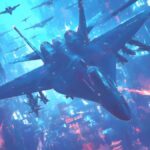

Introduction to Air Weapon Complex
The landscape of warfare is continuously evolving, and at the forefront of this transformation is the Air Weapon Complex. This dynamic field encompasses a range of technologies that enhance aerial combat capabilities. From advanced fighter jets to sophisticated drones, air power has become a critical component in modern military strategy.
As nations invest heavily in their air forces, understanding the intricacies of the Air Weapon Complex becomes essential. Innovations are reshaping how conflicts are approached, making aerial dominance more crucial than ever before. In this article, we delve into the evolution and current state of technology within this complex, exploring exciting advancements and what they mean for future warfare scenarios. Buckle up as we take you on a journey through the skies above!
Evolution of Air Weapon Complex Technology
The evolution of Air Weapon Complex technology has been remarkable. From rudimentary aircraft armed with basic munitions to sophisticated platforms utilizing cutting-edge systems, the journey has transformed aerial combat.
In the early days, air forces relied on simple bombs and machine guns. As warfare progressed, innovations emerged. The introduction of guided missiles marked a significant leap forward. These weapons allowed for greater precision and effectiveness in striking targets from afar.
Fast-forward to today, where advanced avionics play a crucial role in operational success. Modern fighter jets incorporate multi-role capabilities that enable them to perform various missions seamlessly.
Additionally, developments in materials science have led to lighter frames and enhanced durability. This combination improves performance while ensuring safety under extreme conditions.
As technology continues to advance at an unprecedented pace, it reshapes strategies within the Air Weapon Complex and sets new standards for future combat scenarios.
Current State of the Art in Air Weapon Complex
The current state of the art in the Air Weapon Complex showcases remarkable advancements. Modern aircraft are equipped with cutting-edge systems that enhance operational capabilities beyond imagination.
Next-generation fighter jets like the F-35 and Su-57 exemplify this evolution. These machines integrate advanced avionics, allowing for superior situational awareness during missions. Their radar systems can track multiple targets simultaneously, providing unparalleled engagement options.
Moreover, unmanned aerial vehicles (UAVs) have transformed reconnaissance and combat strategies. With stealth features and autonomous navigation, these drones perform high-risk tasks without putting pilots at risk.
Additionally, missile technology has reached new heights. Precision-guided munitions ensure higher success rates while minimizing collateral damage—a crucial factor in modern warfare ethics.
As nations continue to invest heavily in research and development within their air weapon complexes, we witness a rapid shift toward more effective and adaptable aerial combat solutions.
Advancements in Targeting Systems
Recent advancements in targeting systems have revolutionized the Air Weapon Complex. Precision strikes are now more accurate than ever, minimizing collateral damage while maximizing efficiency.
Modern technologies like advanced sensors and enhanced data analytics enable aircraft to identify targets with remarkable clarity. This capability allows for real-time decision-making on the battlefield.
Integration of multi-spectral targeting pods has further improved engagement effectiveness. These pods can detect and track both ground and aerial threats across various weather conditions.
Moreover, innovations such as network-centric warfare contribute significantly. They allow multiple platforms to share target information instantly, ensuring coordinated attacks that leave little room for error.
The focus is on creating systems that not only enhance lethality but also improve pilot safety. The convergence of these technologies ensures a new era of combat where precision meets speed seamlessly within the Air Weapon Complex.
Improvements in Stealth and Maneuverability
Stealth technology has transformed the landscape of aerial combat. Modern aircraft are designed with radar-absorbent materials and advanced shapes that minimize their visibility. This makes them harder to detect, giving pilots a strategic advantage.
Additionally, advancements in engine design contribute significantly to stealth capabilities. Newer engines reduce heat signatures, making it challenging for enemy systems to lock onto them.
Maneuverability is equally crucial in today’s air warfare. Innovations like thrust vectoring allow aircraft to change direction rapidly and perform complex maneuvers that were previously impossible. This agility can be the difference between survival and defeat in dogfights.
Moreover, enhanced control surfaces improve responsiveness during flight operations. These developments make modern fighter jets more adaptable, enabling them to engage targets effectively while evading threats seamlessly.
The fusion of stealth features with superior maneuverability represents a new era for aerial dominance on the battlefield.
The Impact of Artificial Intelligence on Air Weapon Complex
Artificial Intelligence (AI) is revolutionizing the Air Weapon Complex in unprecedented ways. This technology enhances decision-making processes, allowing systems to analyze vast amounts of data quickly and accurately.
AI algorithms can predict enemy movements and assess threats in real-time. This capability significantly reduces response times during critical missions.
Moreover, machine learning techniques are improving targeting accuracy. Drones equipped with AI can identify targets autonomously, minimizing human error and increasing operational efficiency.
The integration of AI also facilitates advanced simulations for training purposes. Pilots can engage in realistic scenarios that adapt dynamically based on their actions, enhancing preparedness for actual combat situations.
However, reliance on AI introduces new challenges as well. Cybersecurity risks increase when sophisticated technologies govern crucial military operations.
Balancing innovation with ethical considerations will be vital as the role of AI continues to expand within the Air Weapon Complex.
Future Possibilities and Challenges for Air Warfare
The future of air warfare is poised for dramatic transformations. As nations invest heavily in advanced technologies, the landscape will evolve rapidly. Hypersonic weapons and drone swarms could redefine aerial combat strategies.
However, these innovations also present challenges. The increased complexity of systems may complicate operational coordination among allied forces. Additionally, ethical dilemmas surrounding autonomous weaponry could spark debates about accountability in conflict zones.
Cybersecurity threats loom large as more interconnected systems emerge in the Air Weapon Complex. Protecting sensitive data becomes paramount to prevent enemy interference or manipulation.
Furthermore, international treaties must adapt to this fast-paced evolution. Balancing advancements with regulations can be a daunting task for governments worldwide.
In essence, while the horizon looks promising for air warfare technology, it brings a suite of hurdles that need addressing to ensure safe and responsible use on the battlefield.
Conclusion: The Role of Air Weapon Complex in Shaping Future Warfare
The Air Weapon Complex stands at the forefront of modern warfare, driving innovations that redefine military strategies. Its evolution has transformed how conflicts are approached and resolved. As technology continues to advance, we see a greater emphasis on precision and efficiency in targeting systems, allowing for minimized collateral damage while maximizing operational effectiveness.
Stealth capabilities and maneuverability enhancements provide an edge in combat scenarios, enabling air forces to evade detection and respond swiftly. The integration of artificial intelligence into these systems represents a significant leap forward. AI not only enhances decision-making but also streamlines operations across various platforms within the complex.
Looking ahead, challenges will persist alongside advancements. Ethical considerations surrounding autonomous weaponry cannot be overlooked. Nations must navigate this landscape carefully as they seek to harness cutting-edge technologies without compromising moral standards or global security.
As the Air Weapon Complex continues to evolve, its influence will shape military doctrines worldwide. Whether through improved aircraft designs or advanced strategic frameworks, it is clear that air power remains a pivotal element in contemporary warfare dynamics—one that promises to grow even more critical as future conflicts unfold.